
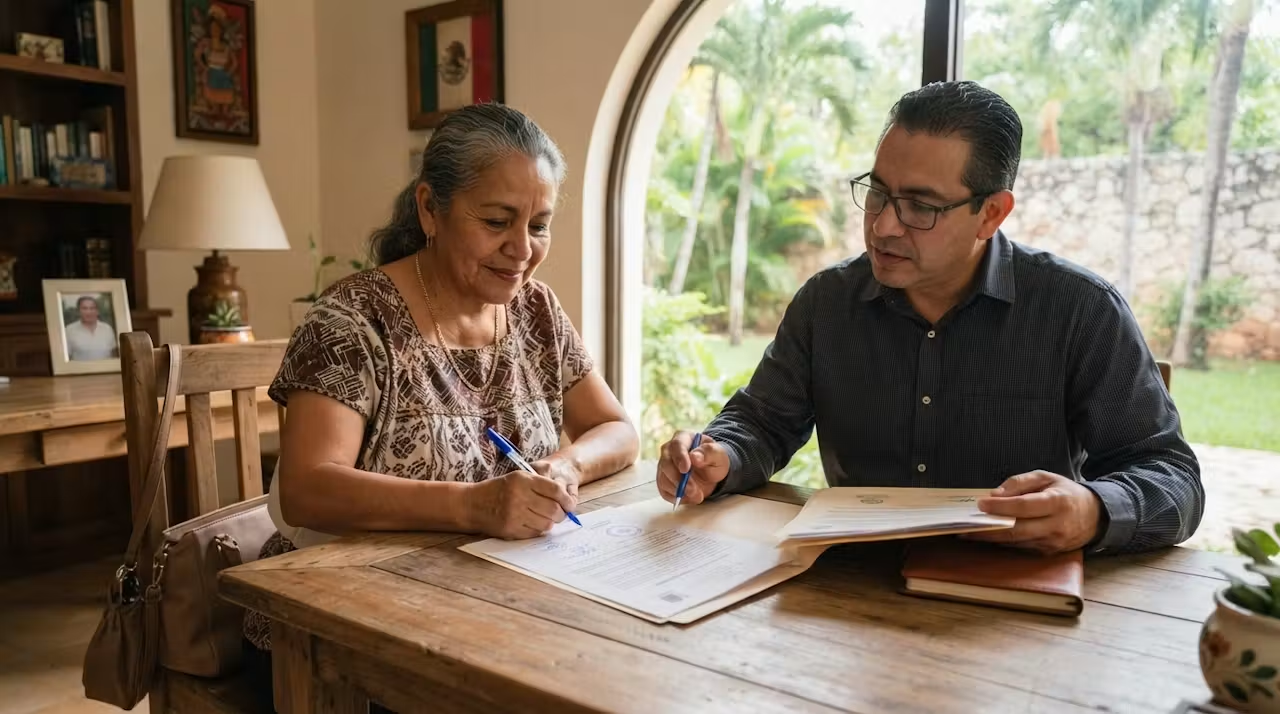
A fideicomiso does not end when the beneficiary dies. When it is properly structured, the beneficiary rights can pass to the person or people designated in the trust.
This makes inheritance one of the important advantages to understand when buying property through a fideicomiso in Mexico. However, what happens next depends heavily on how the trust was originally prepared.
So, who receives the property rights, what does the bank require, and what happens if nobody was named? Let’s go through the process step by step.

Sign up for our newsletter to receive a free ebook “5 Things to Avoid When Investing in Mexican Real Estate”.
What Happens to a Fideicomiso When the Beneficiary Dies?
When a beneficiary dies, the property does not normally need to be removed from the fideicomiso. Instead, the process focuses on transferring the beneficiary rights according to the instructions already contained in the trust.
The trustee bank first needs to be notified of the death. The appropriate documents are then provided so the bank can review the fideicomiso and confirm who was designated to receive the rights.
If a valid substitute beneficiary was named, that person can begin the process of having the beneficiary rights recognized and the trust records updated.
The exact formalities vary between trustee banks and individual circumstances. Additional involvement from a notary or other professionals may also be necessary.
The key point is that the underlying property normally remains within the same trust structure. What changes is the person who holds the beneficiary rights.
What Is a Substitute Beneficiary in a Fideicomiso?
A substitute beneficiary is the person designated to receive your beneficiary rights after your death. You will also sometimes see similar terminology used by banks and closing professionals when discussing succession within the trust.
For example, if you buy a condo in Playa del Carmen, you might name your spouse as the person who should receive your rights. Another buyer might designate children or other relatives.
Depending on how the fideicomiso is structured, more than one substitute beneficiary may potentially be named. The trust can establish how the relevant rights should pass between them.
This is different from simply telling your family that you want someone to have the property. The beneficiary designation becomes part of the actual fideicomiso documentation administered by the trustee bank.
That is why the details matter. The people you intend to receive the rights should be correctly identified in the trust rather than relying on informal family understanding.
Why Naming Substitute Beneficiaries Is So Important
Succession is much easier to plan while you are establishing the fideicomiso than after the original beneficiary has died.
Clear instructions give the trustee an existing framework for determining who should receive the beneficiary rights. Without those instructions, the bank may need to rely on a more complicated succession process and additional legal documentation.
When setting up the trust, check the legal names of your substitute beneficiaries carefully. If the trustee requests additional identifying information, make sure that is accurate as well.
If several people will receive rights, understand how those interests are divided. Do not assume that everyone involved has the same understanding of the percentages or succession arrangement.
We also recommend reviewing these details after major family changes. The person you named when buying a Tulum condo fifteen years ago may no longer reflect your current estate planning wishes.
Our guide on how to set up a fideicomiso in Mexico covers beneficiary selection as part of the wider setup and closing process.
Does Property in a Fideicomiso Have to Go Through Probate?
This is one of the main reasons foreign buyers become interested in substitute beneficiaries. When the fideicomiso contains clear succession instructions, the transfer concerns the beneficiary rights held within an existing trust rather than simply treating the Mexican property as directly owned real estate with no succession mechanism.
That can make the process more straightforward. However, we would be careful with absolute claims that a fideicomiso means probate can never become relevant under any circumstances.
Estate situations can become complicated when no substitute beneficiary was properly designated, when documents contain conflicting instructions, or when someone challenges the succession.
International families add another layer. A foreign owner may have a Mexican property, a will prepared in the United States or Canada, beneficiaries living in several countries, and other assets governed by different rules.
For a straightforward fideicomiso with properly designated substitute beneficiaries, the trust can provide a clear route for succession. For unusual or disputed estates, professional advice becomes much more important.
Can You Change Your Substitute Beneficiaries Later?
Generally, beneficiary designations can be changed later according to the terms of the fideicomiso and the trustee bank’s required procedures.
There are plenty of reasons you might want to do this. Marriage, divorce, the birth of children, the death of an existing substitute beneficiary, or a wider change to your estate plan can all make the original instructions outdated.
Changing beneficiaries is not necessarily as simple as sending the bank an email. The trustee may require formal documentation, and depending on the change, a notary or other professionals may become involved.
Bank administration fees and other expenses that are not included in the initial fideicomiso cost calculation can also apply. If your family situation changes, ask the trustee what is required rather than leaving outdated instructions in place.
Are There Taxes or Fees When a Fideicomiso Is Inherited?
There can be costs associated with transferring beneficiary rights after death. These may include trustee administration charges, notary expenses, registration costs, and professional fees.
Tax consequences deserve separate professional review. Your nationality, tax residence, the structure of the fideicomiso, and the wider estate can all matter.
We would therefore avoid assuming that inheriting through a fideicomiso is universally tax free simply because a substitute beneficiary was named.
If the property has significant value or the estate crosses several jurisdictions, speak with qualified tax and legal professionals before making decisions based on general online advice.
Can an Heir Sell the Property Instead of Keeping It?
Yes, once the beneficiary rights have been properly transferred and the new beneficiary is recognized according to the fideicomiso and required legal process, that person can generally exercise the rights provided by the trust.
That does not mean the heir has to move to Mexico or keep the property for the rest of their life.
The new beneficiary may decide to use the home, rent it, retain it as an investment, or sell it. If several beneficiaries inherit rights together, their respective interests and the trust terms become important when making those decisions.
A future sale will have its own closing process, trustee involvement, expenses, and potential tax consequences. Those issues should be reviewed when the beneficiary actually decides to sell.
How to Prepare Your Fideicomiso for Inheritance
You can make the eventual succession considerably easier by organizing a few things while you are alive. We recommend reviewing the following points periodically rather than forgetting about the trust after closing.
- Check who is currently named as your substitute beneficiary.
- Verify that names and personal details are correct.
- Review how ownership percentages are structured.
- Keep your fideicomiso documents accessible.
- Make sure your wider estate plan does not conflict with the trust.
- Update beneficiaries after major family changes.
- Make sure your family knows which bank administers the fideicomiso.
The last point is easy to overlook. Your family may know that you own a condo in Playa del Carmen, but they may have no idea which bank holds the fideicomiso or where you stored the closing documents.
A simple organized file containing the trust agreement, trustee contact details, and relevant property documents can save a lot of confusion later.
Is a Fideicomiso Good for Estate Planning?
A fideicomiso can be useful for estate planning because it allows foreign property owners to establish succession instructions within the ownership structure itself.
For many buyers, the ability to name substitute beneficiaries is one of its practical advantages. It provides a clear mechanism for determining who should receive the beneficiary rights after death.
However, a fideicomiso is not a complete estate plan.
You may still own bank accounts, investments, businesses, real estate outside Mexico, and other assets that need separate planning. Your home country’s inheritance and tax rules may also affect your family.
We therefore see the fideicomiso as one part of a wider plan. Set up the beneficiary provisions carefully, keep them current, and make sure they work with the rest of your estate arrangements rather than contradicting them.