
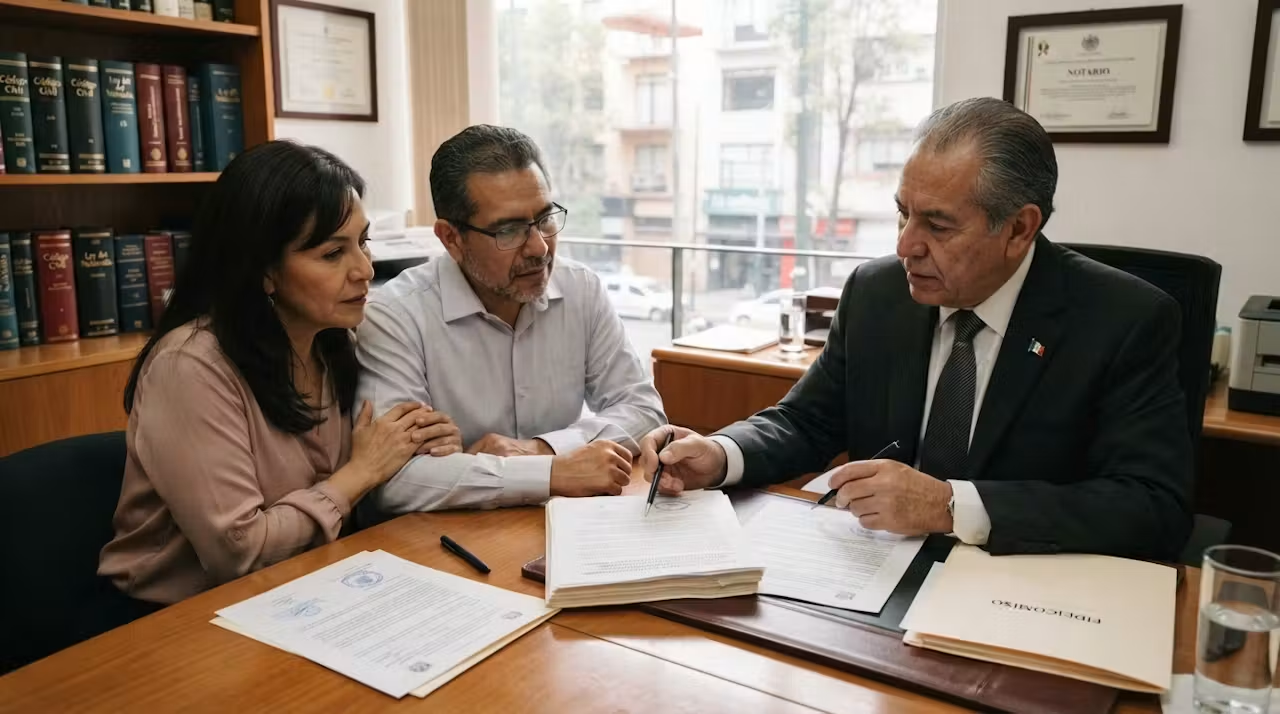
A properly established fideicomiso is generally a secure and standard legal structure for foreigners buying residential property in Mexico’s restricted zone.
The Mexican bank acts as trustee and holds legal title within the trust. You are the beneficiary, with your rights over the property defined in the fideicomiso agreement. That structure is commonly used by foreign buyers purchasing homes and condos along Mexico’s coast.
So, is a fideicomiso safe? Generally, yes. But you still need to make sure that the property going into that fideicomiso is safe to buy. That difference is what we will focus on throughout this guide.

Sign up for our newsletter to receive a free ebook “5 Things to Avoid When Investing in Mexican Real Estate”.
Is a Fideicomiso Safe for Foreign Property Buyers?
Yes, when it is properly established. Fideicomisos are widely used by foreigners buying residential property within Mexico’s restricted zone, including coastal markets such as Cancún, Playa del Carmen, and Tulum.
The structure exists because Article 27 of the Mexican Constitution restricts direct foreign ownership of land within 50 kilometers of the coast and 100 kilometers of international borders. A bank trust provides a legal mechanism for foreign residential buyers to acquire rights over property within these areas.
A Mexican bank authorized to provide fiduciary services acts as trustee. The foreign buyer becomes the beneficiary, and the trust agreement establishes how the property is held and what the beneficiary can do with it.
This is not an informal arrangement between you and a bank manager. The fideicomiso operates within Mexican law and becomes part of the legal structure through which your property rights are held.
However, there are really two different questions hiding inside “Is a fideicomiso safe?”
The first is whether the fideicomiso structure itself provides a legitimate way for foreigners to hold residential property in the restricted zone. Generally, yes.
The second is whether the property transaction itself is safe. That answer depends on the property, seller, developer, contracts, title, debts, permits, and due diligence performed before closing.
We consider that distinction essential. You can have a perfectly valid fideicomiso attached to a purchase that created avoidable problems elsewhere. The existence of the trust does not replace a proper investigation of what you are actually buying.
Does the Bank Own Your Property?
Technically, the trustee bank holds legal title to the property within the fideicomiso. This is the part that understandably makes some foreign buyers uncomfortable when they first hear about the system.
But saying simply that “the bank owns your property” gives the wrong impression.
The bank holds title in its capacity as trustee. It must administer the property according to the fideicomiso agreement and applicable Mexican law. You, as beneficiary, receive the practical rights established through that trust.
Those rights generally allow you to use and enjoy the property, rent it, improve it, sell it, transfer your beneficiary rights, and designate substitute beneficiaries. The exact terms should always be confirmed in your trust agreement.
For example, if you buy a condo in Playa del Carmen through a fideicomiso, the bank does not decide when you can stay there. It does not collect your rental income for itself or suddenly put the condo on the market because prices increased.
You remain the person making the practical ownership decisions, subject to Mexican law, condominium rules, permits, and the terms of the trust.
The trustee relationship is therefore very different from the bank holding a property as one of its normal commercial assets.
If you want a deeper explanation of the trustee, beneficiary, restricted zone, trust term, and ownership rights, our complete guide to fideicomiso in Mexico covers the structure in detail.
Can the Bank Take Your Property?
A trustee bank cannot simply wake up one morning and decide that it wants your Tulum condo for itself. The bank’s powers and responsibilities come from the trust agreement and Mexican law.
It holds title for a defined fiduciary purpose. It is not supposed to treat the property as an unrestricted asset that it can occupy, sell, mortgage, or keep for its own benefit whenever it wants.
This is one reason reviewing the fideicomiso agreement before signing matters. That document defines your beneficiary rights and provides the instructions under which the trustee acts.
There is, however, an important difference between the bank arbitrarily taking your property and a legitimate legal problem affecting it.
A fideicomiso does not place the property outside Mexican law. Taxes still need to be handled. Court orders can still matter. Valid claims, contractual obligations, and other legal issues do not disappear because a bank serves as trustee.
So when buyers ask us whether the bank can “take” their home, our concern is usually elsewhere. We would spend more time verifying the property, seller, contracts, and closing documents than worrying about the trustee randomly deciding to keep the real estate.
What Happens to Your Fideicomiso If the Bank Fails?
This is another common concern, especially for buyers coming from countries where they associate anything held by a bank with the bank’s own balance sheet.
Property held in a fideicomiso is not supposed to function like one of the trustee bank’s ordinary assets. The bank holds it in a fiduciary capacity for the purposes established by the trust.
That separation matters if the trustee experiences serious financial problems. Your property is not simply a condo owned by the bank that can be treated in the same way as its normal corporate assets.
If a trustee can no longer perform its role, the issue becomes replacing or substituting the trustee rather than the bank suddenly becoming the beneficial owner of your home.
The exact procedure depends on the circumstances, the trust agreement, and applicable regulations. Trustee substitution can involve paperwork, professional assistance, and administrative time.
From a buyer’s perspective, the important point is that the security of your fideicomiso does not depend on pretending that the trustee bank can never encounter financial trouble.
The structure is designed around the bank acting as trustee rather than owning the property for its own economic benefit.
Can the Mexican Government Take Property Held in a Fideicomiso?
No special rule allows the Mexican government to take your property simply because you are a foreigner using a fideicomiso.
This fear sometimes appears in online discussions about buying property in Mexico. It usually mixes the restricted zone rules with a much broader fear that foreign property rights can disappear without warning.
A fideicomiso does not create an automatic government right to confiscate your home. It is a recognized mechanism used to facilitate foreign residential ownership in areas where direct foreign ownership is restricted.
At the same time, owning through a fideicomiso does not place you above normal Mexican law.
Property can still be affected by legitimate legal processes. Taxes and other obligations still matter. Court decisions can have consequences. Mexico also has legal mechanisms concerning expropriation for public purposes, just as other countries have forms of eminent domain.
Those possibilities should not be confused with the government having a general right to seize coastal homes from foreigners.
When evaluating the safety of a Riviera Maya purchase, we would focus on realistic transaction risks rather than dramatic confiscation scenarios. In practice, the problems buyers are much more likely to encounter are far less sensational… and much easier to prevent.
What Are the Real Risks of a Fideicomiso?
Once we move past fears about banks taking properties or the government confiscating foreign owned homes, the risks become much more practical.
Most problems are not caused by the basic fideicomiso structure. They happen because something surrounding the purchase was not properly checked, documented, or maintained.
Buying a property with title problems
A fideicomiso does not magically clean the title of a property. If the seller does not have proper ownership rights, there is an unresolved lien, or the registered information creates a problem, establishing a trust does not make those issues disappear.
This is why title verification comes before feeling comfortable with the fideicomiso itself. Your closing professionals should confirm who legally owns the property and review the relevant records before you complete the purchase.
Outstanding obligations can matter as well. The transaction should be reviewed for liens and other issues that could affect a clean transfer.
Think of the fideicomiso as the container for your ownership rights. You still need to make sure that what goes into that container is legally sound.
Problems with pre construction developments
Pre construction deserves special attention because the risk is different. You may be purchasing contractual rights to a property that has not yet been completed or individually titled.
A developer telling you that your condo will eventually be held through a fideicomiso does not guarantee that construction will finish on schedule. It also does not prove that the developer has everything required to deliver what was promised.
You still need to investigate the developer, land ownership, permits, project documentation, contracts, delivery conditions, and the legal structure of the transaction.
We see this distinction as especially important in Tulum, where foreign buyers have many pre construction options. The future fideicomiso and the reliability of the development are two separate questions.
Incorrect or incomplete fideicomiso documents
Your fideicomiso agreement deserves a proper review before you sign it. Small administrative errors can become annoying later, while more important mistakes can complicate future transactions.
Check your full legal name, property information, beneficiary details, trustee information, and the rights established in the agreement. If you are naming substitute beneficiaries, verify their information carefully as well.
Do not assume every document is correct simply because several professionals have already handled it. Read the final version and ask questions when something does not match what you agreed.
Unpaid fideicomiso fees
Trustee banks charge annual administration fees for maintaining the fideicomiso. Keeping these payments current is one of the simplest responsibilities you have as beneficiary.
Problems can arise when owners change email addresses, move abroad, ignore bank correspondence, or simply forget about the annual charge for several years.
If you are unsure whether your account is current, contact the trustee and request an updated statement. It is much easier to resolve an outstanding balance before you are trying to sell or modify the trust.
Our dedicated guide to fideicomiso costs explains the normal annual charges and other trustee fees you may encounter during ownership.
Not naming substitute beneficiaries
A fideicomiso can allow you to designate substitute beneficiaries who can receive your beneficiary rights after your death. This can be an important part of planning what happens to the property later.
Leaving this issue until “someday” can make succession more complicated than necessary. We recommend discussing it while the trust is being prepared, particularly if you are buying with a spouse or want children or other family members to receive your rights.
The exact estate planning consequences depend on your personal circumstances, so more complex situations deserve professional advice. We will cover this subject separately in our guide to inheriting property through a fideicomiso.
Common Fideicomiso Problems Foreign Buyers Encounter
Not every fideicomiso problem threatens your ownership. In fact, many complaints we hear are administrative.
Banks can process requests slowly. Documents may pass through several departments. Getting a response from the correct fiduciary contact can sometimes take longer than a buyer expects.
Communication can become particularly frustrating when an owner lives outside Mexico and needs something handled quickly. This often becomes noticeable during a sale, amendment, or beneficiary change because the trustee needs to participate in the process.
Unexpected charges are another source of frustration. A buyer may understand the annual administration fee but never check what the bank charges for amendments, transfers, cancellations, or other fiduciary instructions.
Incorrect beneficiary information can also create additional paperwork. Something as simple as an outdated address or contact email can make communication harder years after closing.
Then there is document management. Owners sometimes complete a purchase, put the paperwork somewhere safe, and forget where “safe” was. Years later, they need copies for a sale and have to reconstruct their records.
None of this means you should ignore administrative problems. A delayed trustee response can be extremely frustrating when a buyer is waiting to close your sale.
But there is a major difference between slow paperwork and losing ownership of your property. When you read complaints about fideicomisos online, it helps to understand which type of problem the owner actually experienced.
How to Make a Fideicomiso Purchase Safer
You cannot remove every risk from a real estate transaction. You can remove many avoidable ones by doing the important work before money changes hands.
- Use an independent Mexican real estate attorney. Your attorney should represent your interests and review the transaction rather than simply relying on documents supplied by the seller or developer.
- Work with an experienced notary. The Mexican Notario Público has an important legal role in formalizing the transaction, reviewing required documentation, calculating certain taxes, and registering the transfer.
- Verify the property’s title and ownership history. Confirm that the seller has the legal authority to transfer the property you are buying.
- Check for liens and outstanding obligations. Existing debts or registered claims should be identified and properly addressed as part of the closing process.
- Review the fideicomiso agreement before signing. Check the property description, your rights, trustee information, names, and other important terms rather than signing automatically.
- Confirm beneficiary and substitute beneficiary information. Names and personal details should match the documentation used for the transaction.
- Keep copies of your trust and closing documents. Store digital and physical copies somewhere you can access years later, especially if you eventually sell or amend the trust.
- Pay annual trustee fees on time. Keep your contact information updated with the bank and maintain records of your payments.
For pre construction, we would add another layer of checks around the developer and project itself. A beautiful sales office, impressive renders, and a future fideicomiso do not replace legal due diligence.
At RivieraMayaCozy, we prefer buyers to understand these checks before they reserve a property. It is much easier to investigate first than to discover a serious issue after a large deposit has already been transferred.
Is a Fideicomiso Safer Than a Mexican Corporation?
Neither structure is automatically safer in every situation. A fideicomiso and a Mexican corporation serve different purposes, so the better choice depends on what you plan to do with the property.
For a typical foreigner buying a residential property in the Riviera Maya, a fideicomiso is usually the simpler structure. You do not need to create and maintain a separate company simply to own your home or vacation condo.
A corporation can make sense for development projects, commercial activities, larger property portfolios, or investments involving several business partners. In those cases, the additional accounting and corporate obligations may have a genuine purpose.
Complexity itself can create problems when a buyer does not understand the structure being used. Forming a corporation purely because someone says it is “safer” can therefore achieve the opposite of what you intended.
If you are deciding between the two, our guide to fideicomiso vs Mexican corporation compares ownership, rentals, costs, taxes, administration, and the situations where each structure makes more sense.
What Happens to Your Fideicomiso When You Die?
One useful feature of a fideicomiso is the ability to designate substitute beneficiaries. These are the people you identify to receive your beneficiary rights after your death, subject to the terms of the trust and applicable law.
For example, a married buyer might designate a spouse as the substitute beneficiary. Parents may choose their children. The appropriate arrangement depends on your family and estate planning goals.
When this information is properly included in the fideicomiso, succession can be more straightforward because the trust already contains instructions about who should receive the beneficiary rights.
This does not mean every inheritance situation becomes automatic or completely free of paperwork. The trustee will still require documentation and procedures must be followed.
International estate planning can also become more complicated when you have assets and heirs in several countries. If your situation goes beyond a simple beneficiary arrangement, speak with professionals who understand both Mexican property ownership and your wider estate plan.
The practical lesson is simple. Do not wait until years after closing to think about succession. Review your substitute beneficiary information when establishing the trust and keep it accurate if your circumstances change.
Is Buying Property Through a Fideicomiso Worth the Risk?
For most foreign residential buyers in Mexico’s restricted zone, we would not consider the fideicomiso itself the main risk of buying property.
A properly established fideicomiso is designed to provide a legal structure through which foreigners can hold rights to residential real estate in areas such as Cancún, Playa del Carmen, Tulum, and the rest of the Riviera Maya.
The more important risks usually sit underneath the ownership structure.
Does the seller actually have the legal authority to sell? Is the title clean? Are there outstanding obligations? Has the purchase contract been properly reviewed? If you are buying pre construction, has the developer and project been investigated?
Those are the questions we would spend most of our energy answering.
You should also choose your professionals carefully. An experienced notary, independent attorney, accountant when needed, and real estate agent familiar with foreign purchases can identify problems before they become expensive.
Then maintain the fideicomiso properly after closing. Keep your documents, update your contact information, review important changes carefully, and pay the trustee fees when they are due.
No property ownership structure removes every legal or financial risk. A fideicomiso is no different.
But the fact that a Mexican bank serves as trustee should not, by itself, make you afraid of buying property in the restricted zone. For the typical foreign residential buyer, the structure is there to facilitate ownership rather than make ownership inherently dangerous.
When someone asks us, “Is a fideicomiso safe?”, our answer is therefore yes, when it is established correctly. But we immediately follow that with another question: is the property itself safe to buy?
That second question is where good due diligence really matters.