To set up a fideicomiso in Mexico, you normally do not walk into a bank and create the trust yourself. The process forms part of your wider property closing and involves several professionals.
Your Mexican trustee bank establishes the trust. A Notario Público handles important legal parts of the transaction, while the Secretaría de Relaciones Exteriores (SRE) is involved in the required authorization. Your attorney or closing team will usually coordinate much of the process for you.
In practical terms, you choose the property, complete due diligence, select a trustee bank, apply for the SRE permit, provide your documents, prepare and review the trust, sign the closing documents, and complete registration.
That may sound like a lot of moving parts. Fortunately, most steps happen alongside the normal property purchase rather than as a completely separate process.
We have seen buyers worry about the fideicomiso paperwork before they have even chosen a condo. Usually, there is no reason to do that. The important thing is understanding what happens, who handles each step, and what you should check before signing.

Sign up for our newsletter to receive a free ebook “5 Things to Avoid When Investing in Mexican Real Estate”.
When Do You Need to Set Up a Fideicomiso?
A foreign buyer generally needs a fideicomiso when purchasing residential property within Mexico’s restricted zone and acquiring it personally rather than through another qualifying structure.
The restricted zone covers land within 50 kilometers of Mexico’s coastline and 100 kilometers of an international border. Because the Riviera Maya sits along the Caribbean coast, foreign residential buyers in Cancún, Playa del Carmen, Tulum, and surrounding communities usually fall within these rules.
Outside the restricted zone, foreigners can generally acquire eligible property through direct ownership, so a fideicomiso may not be necessary.
There are also different considerations when property is acquired through a Mexican corporation for qualifying purposes. That is a separate ownership structure and should not be confused with establishing a personal residential fideicomiso.
For the complete explanation of the restricted zone and why this ownership mechanism exists, read our guide to fideicomiso in Mexico.
Who Is Involved in Setting Up a Fideicomiso?
Several parties participate in a fideicomiso purchase. Understanding their roles makes the process much easier because each one handles a different part of the transaction.
The foreign buyer
You are normally the beneficiary of the fideicomiso. The trustee bank holds legal title within the trust structure, while the trust agreement establishes your rights over the property.
You provide the personal documents required for the transaction, review and approve the trust terms, choose substitute beneficiaries, and sign the necessary documents.
If you are purchasing with a spouse, partner, or another person, your closing team should also establish how the beneficiary interests will be divided.
The trustee bank
An authorized Mexican financial institution acts as trustee. Its role is to hold legal title and administer the trust according to the fideicomiso agreement and applicable Mexican law.
The bank is not purchasing your condo as an investment. It does not move into the property, collect your rental income for itself, or decide when you are allowed to sell.
You retain the practical rights granted through the fideicomiso. The trustee performs the fiduciary role required by the ownership structure.
The bank also charges for this service. There is normally an initial setup charge followed by an annual administration fee, plus potential charges for certain future instructions or amendments.
The notary public
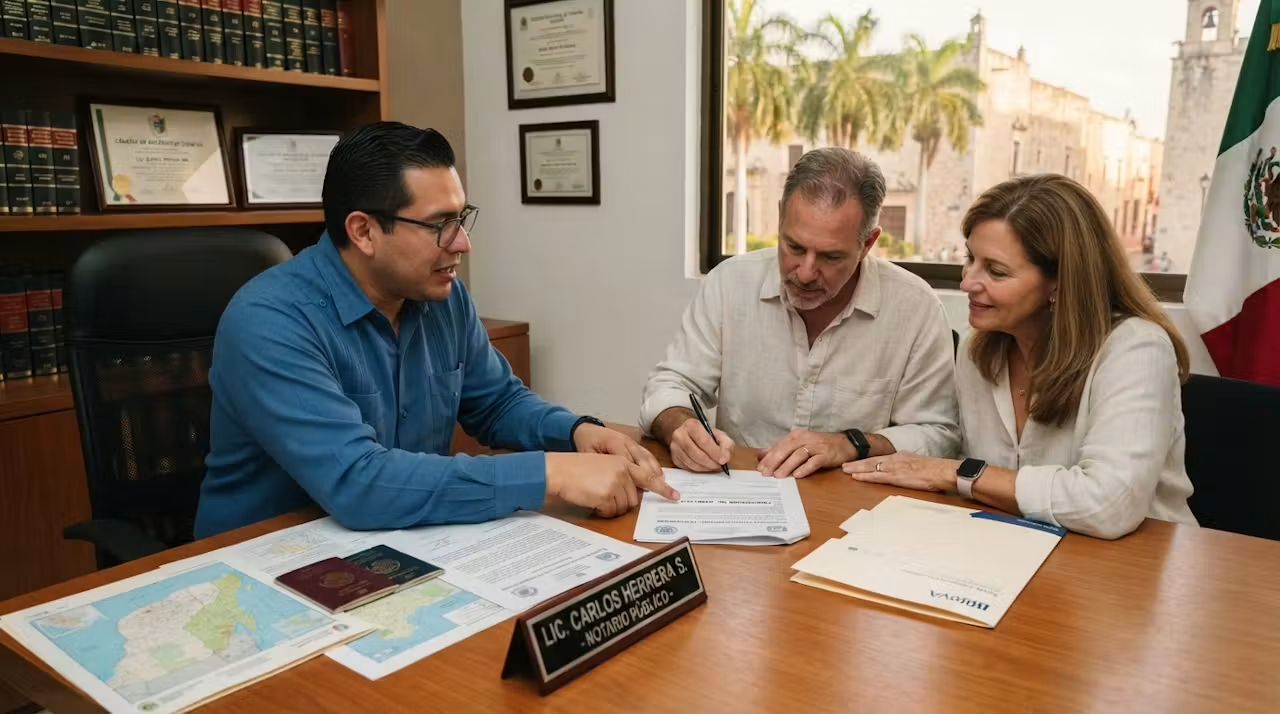
A Mexican Notario Público has a much more important legal role than the term “notary” suggests to many American or Canadian buyers.
The notary participates in formalizing the real estate transaction, reviewing required legal documentation, handling important tax and closing matters, and arranging registration of the transaction with the appropriate Public Registry of Property.
This is not simply someone watching you sign a document and stamping the final page.
The notary is therefore central to a normal Mexican property closing, whether the foreign buyer personally understands every administrative step or not.
Your attorney or closing professional
We generally recommend that foreign buyers have independent professional assistance during the purchase. Your attorney or closing professional can help coordinate the different parties while keeping your interests at the center of the transaction.
That can include reviewing contracts, organizing due diligence, checking documents, communicating with the trustee, following the SRE process, and identifying issues before closing.
This becomes particularly valuable when you are buying from abroad. You may have a seller, developer, bank, notary, real estate agent, and several administrative departments all requesting information at different stages.
At RivieraMayaCozy, we see the smoothest closings when responsibilities are clear from the beginning. You should know who is checking the property, who is communicating with the bank, and who is following each outstanding document.
How to Set Up a Fideicomiso in Mexico Step by Step
The exact order can overlap because several parts of a Mexican closing happen at the same time. Still, the following sequence gives you a good picture of how to set up a fideicomiso in Mexico from the initial purchase agreement through registration.
Step 1: Find the Property and Agree on the Purchase
The fideicomiso process normally begins after you have identified the property and agreed on the basic purchase terms.
Depending on the transaction, you may first make an offer, sign a reservation document, or enter into a purchase agreement. The exact process differs between resale and pre construction properties.
At this point, your closing team knows which property will be transferred, who the seller is, and which foreign buyers need to appear as beneficiaries.
You do not normally need to establish a random fideicomiso months before deciding what you are buying. The trust is prepared around the actual property transaction.
This is also the right moment to make sure your purchase agreement allows enough time for legal checks and closing procedures. A promised closing date should reflect the fact that banks, the notary, government processes, and property documentation are involved.
Step 2: Complete Due Diligence on the Property
Before worrying about which trustee bank has the nicest online portal, make sure the property itself is safe to buy.
Your closing professionals should verify the seller’s ownership and authority to transfer the property. The title and relevant property records need to be reviewed, along with liens or other registered issues that could affect the transaction.
Property taxes should be checked. If you are buying a condominium, outstanding HOA obligations may also need to be confirmed.
Depending on the property, permits, construction documentation, condominium documentation, and other records may require review as well. Pre construction purchases deserve additional attention because you are buying before the finished unit has necessarily been individually registered and delivered.
This step is separate from creating the trust.
A fideicomiso does not repair defective title or guarantee that a developer will finish construction. It gives you an ownership structure. Due diligence determines whether the underlying property and transaction are acceptable.
We explain this distinction in much more detail in our guide answering is a fideicomiso safe? (including the realistic problems foreign buyers should watch for).
Step 3: Choose a Mexican Trustee Bank
Once the transaction is moving forward, a Mexican financial institution authorized to provide fiduciary services needs to act as trustee.
Your attorney, closing professional, agent, developer, or notary may already have experience working with several banks. That can make coordination easier, but you should still understand which institution is being proposed and what it charges.
Trustee banks can have different setup fees, annual administration charges, additional service fees, document requirements, and processing procedures.
Service matters too. You may own the property for twenty years or longer, so saving a small amount at setup should not be your only consideration.
We would ask for the bank’s current fee schedule and understand how communication with its fiduciary department will work after closing. You do not need to turn the decision into a month long bank comparison, but you should know who will administer your trust.
Step 4: Apply for the SRE Permit
Establishing the fideicomiso for a foreign buyer in the restricted zone involves authorization connected with Mexico’s Secretaría de Relaciones Exteriores, commonly referred to as the SRE.
This is part of the legal framework that allows the foreign beneficiary to acquire rights over restricted zone property through the trust.
In a normal Riviera Maya transaction, you generally will not be expected to personally navigate government offices and figure out the application from scratch. The trustee, notary, attorney, or closing team will normally coordinate the relevant process.
You will, however, need to provide accurate information and documentation so the application can be prepared correctly.
The SRE stage is one reason we avoid promising buyers that every fideicomiso can be completed within an exact number of days. Government processing is one part of a larger closing timeline, and administrative delays can happen.
Step 5: Submit Your Documents
The trustee bank and closing team will request documents from you to prepare the fideicomiso and satisfy identification and compliance requirements.
The exact list varies between banks and transactions.
A typical foreign buyer may be asked to provide documents such as:
- Passport and other identification.
- Immigration documentation when applicable.
- Proof of address.
- Tax information when required.
- Property information.
- Purchase documentation.
- Information for each beneficiary and substitute beneficiary.
Additional information may be requested depending on the bank’s compliance procedures, your nationality, ownership structure, or transaction.
Send clear and current copies whenever possible. Names should appear consistently across your passport, purchase documents, bank application, and trust paperwork.
A small difference in a name may look harmless to you but create another round of emails and corrections later. We prefer checking these details early rather than discovering them when everyone is preparing to sign.
Step 6: Name Your Substitute Beneficiaries
During the fideicomiso setup, you can normally designate one or more substitute beneficiaries. These are the people intended to receive your beneficiary rights after your death, according to the trust terms and applicable procedures.
For many buyers, that might be a spouse or children. Other family arrangements are possible depending on your estate planning goals.
Do not treat this section of the application as an unimportant form field.
Think carefully about who you want to receive your rights and make sure their information is accurate. If you are purchasing together with another person, discuss how each beneficiary’s interest should be handled.
A properly prepared beneficiary structure can make future succession more straightforward. More complicated family or international estate situations should be reviewed with appropriate legal professionals.
Step 7: Review the Fideicomiso Agreement
Before signing, review the fideicomiso agreement carefully. Your attorney should help you understand anything that is unclear rather than simply telling you where to place your signature.
Check the property description and identifying information. Confirm that your legal name appears correctly and that any other beneficiaries are listed as intended.
If several people are acquiring beneficiary interests, verify the ownership percentages or rights established for each person.
Check your substitute beneficiaries as well. Their names and identifying details should match the information you provided.
You should also understand which bank serves as trustee, the term of the fideicomiso, your rights under the trust, and the fees connected with its administration.
This is the time to correct errors.
Fixing an incorrect name or beneficiary instruction before closing is generally much easier than discovering the problem years later when you want to sell, transfer rights, or handle an inheritance.
Step 8: Sign the Fideicomiso and Closing Documents
Once due diligence is complete, the trust documents are ready, and the other closing requirements have been satisfied, the transaction can move toward signing.
The exact signing process depends on the purchase. The buyer, seller, trustee, and notary each have roles within the wider transaction, although that does not necessarily mean everyone sits around the same table at the same moment.
Your closing team should explain what you personally need to sign and when.
Foreign buyers cannot always travel to Mexico for closing. In some situations, an appropriately prepared power of attorney can allow an authorized representative to complete specified actions on the buyer’s behalf.
If you expect to use a power of attorney, discuss it early. A document signed abroad may require specific formalities before it can be used in Mexico, so this is not something we would leave until two days before closing.
Before signing anything, make sure the final versions reflect the terms you reviewed. Last minute changes should be understood rather than accepted automatically because everyone wants to finish the transaction.
Step 9: Register the Property and Fideicomiso
Signing the closing documents is an important milestone, but signing and registration are not the same stage.
The transaction must proceed through the appropriate registration process with the Public Registry of Property. The notary normally handles the required registration work following closing.
This creates an official public record of the relevant property rights and transaction.
Registration can take additional time after documents have been signed. Do not assume something is wrong simply because the final registered documentation is not available the following morning.
Once the process is complete, keep copies of your fideicomiso agreement and final closing documents. We recommend storing them both digitally and physically.
Years later, you may need these records when selling, modifying the trust, dealing with the trustee, or handling estate matters. Having an organized closing file saves a surprising amount of trouble.
How Long Does It Take to Set Up a Fideicomiso?
As a planning range, a fideicomiso related closing process can often take around four to eight weeks, but we would never treat that as a guaranteed deadline.
Several independent parties are involved. The trustee bank has its own processing time. The SRE authorization must be handled. The notary needs complete documentation, and the property itself must be ready for transfer.
Corrections can add time as well. A name that does not match a passport, missing seller document, incomplete bank application, or issue discovered during due diligence can slow the process.
Mexican holidays and administrative workloads can also affect timing. If your purchase depends on closing by a specific date, tell your closing team early rather than assuming every institution can adjust to your schedule.
Pre construction works differently. You might sign a purchase contract long before the finished unit is ready for formal transfer. The fideicomiso and final title process may therefore happen much later, closer to delivery and legal closing.
A resale condo that already has complete documentation can follow a very different timeline.
For that reason, we prefer giving buyers a realistic range and regular updates rather than promising an exact closing date before the bank, notary, and property documents have been reviewed.
How Much Does It Cost to Set Up a Fideicomiso?
A reasonable planning range for the initial trustee setup fee is around $500 to $1,500 USD. After establishment, annual bank administration commonly falls around $500 to $1,000 USD.
Those are approximate ranges, not official nationwide prices. Trustee banks establish their own fee schedules, and applicable taxes may affect the final amount.
Most importantly, do not confuse the fideicomiso setup fee with your total property closing costs.
The purchase can involve acquisition tax, notary costs, registration, certificates, government related charges, and other transaction expenses. Those costs do not all become “fideicomiso fees” simply because you happen to be buying through a trust.
Our dedicated guide to how much a fideicomiso costs in Mexico breaks down the initial, annual, and occasional expenses in much more detail.